

 My love-hate relationship with the “Tales of” video game series goes back almost a decade now. Don’t get me wrong — there’s a lot more love than hate. But sometimes those emotions are two sides of the same coin, after all.
I was introduced to the series through a ROM of the Super Nintendo’s Tales of Phantasia back in high school. At the time, I was impressed by the idea of a fighting-game-like battle system in an RPG — it seemed like a nice change of pace from turn-based, menu-heavy systems.
That game was decent, but I wasn’t really a huge fan until the summer of 2004, when Tales of Symphonia hit the GameCube and redefined my view of the series and RPGs forever.
See, Symphonia had quite a few similarities to Phantasia, including summone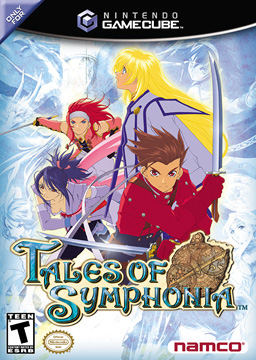 r spirits, names of items and locations, and the battle system was still active and frenetic. But there were several changes and additions that got me hooked.
First of all, the developers added four-player co-op — and if you know anything about me, you know that co-op is my weakness. I love playing games with friends, especially in a setting where you have to work together. Symphonia made that possible, taking those active battles and turning them into team-based affairs that took place in a 3D world. There was also a ton of voice acting, a decent cel-shaded visual style, and compelling characters (although the plot was mediocre). In the middle of a summer where we really didn’t have a ton to do, that game proved to be the one that grabbed my interest.
2006’s Tales of the Abyss (we’re not going to talk about Legendia, which came in between) was an improvement in a lot of ways — better graphics, a more combo-based battle system, mystic artes and the ability to run anywhere in the battlefield. And then there was Vesperia in 2008, the first offering on a next-gen system, which introduced HD graphics, fully voiced skits and a protagonist who didn’t mind getting his hands dirty.
All of that is well and good, but it’s also the point where things start to fall apart.
Vesperia was a great game, and badly needed for a console that (at the time) was lacking in RPGs. But shortly after the game’s release in the States, rumors started swirling about a PS3 version with all sorts of added content — new costumes, boss fights, scenes, and worst of all, two more playable characters. Hell, it was even confirmed that the English voice actors did additional VO work for the PS3 version. But it was never released outside of Japan.
See, that’s the problem with Tales games — they often get left behind. The series has kind of a niche following here in the U.S., and because Namco Bandai expects every game to sell a brazillion copies, they come away disappointed with the sales results even though the small fanbase is a rabid one. Because of that, well … let’s just say we miss out on some things. Here’s a list of the games we’ve never seen: Destiny 2, Rebirth, Innocence, Hearts, Tempest, Versus, and six of the seven World games. That’s 12 games — 12! — over more than a decade, four of them main series titles.
Why is all of this being drudged up for me all of a sudden? Because Thursday marked the release of the newest Tales game in Japan, Tales of Xillia. It’s out for the PS3, and it looks like the best game yet. Fantastic graphics, the best battle system of the series, a solid cast of characters and perhaps the most serious plot in a Tales title to date. And yet, American Tales fans are still waiting for Tales of Graces (originally released in Japan in 2009) and Tales of the Abyss 3DS (released there this past summer, but localization will take until 2012 apparently even though it already went through that process for the PS2 version here). God only knows when we’ll get Xillia, if ever — NB’s production team, as always, has said that bringing a title over to the U.S. depends on “customer interest” and “sales results.”
I love the Tales series, I really do. But it ain’t easy.

 Gray Areas
Thanks for the review! And I admit Phantasia would be the standard for most of these RPG games, same goes for Phantasy Star Online before World or Warcraft and other MMORPG’s took control.