

This column originally ran on September 24, 2009.
Final Fantasy VI. Some call it the greatest game of all-time. Others get confused by the American numbering system and can’t remember if this is III or VI. Checkpoint takes a look back at the middle of Square’s glory days, and discusses where VI belongs in the annals of history.

Character Building
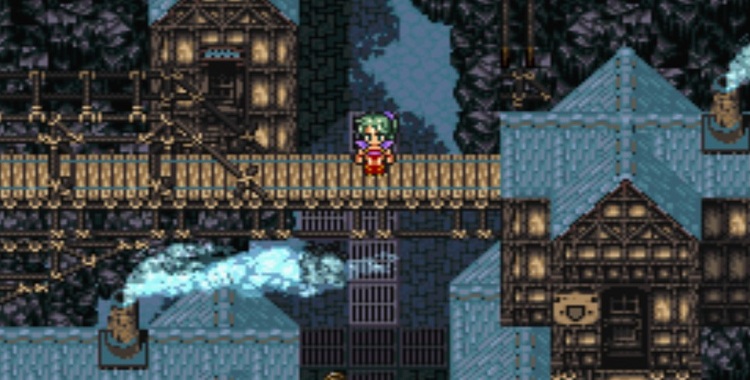
Shaun: Probably the strongest case for a main character is Terra, but she is absent for more than half the game, so there is room for others to take that mantle.
Lee: Let’s be honest — the real main character was Banon. BAM, beard time.
Chris: He has a point. If Banon dies, it’s game over. So you used Health nine million times.
Lee: And he could heal without warning.
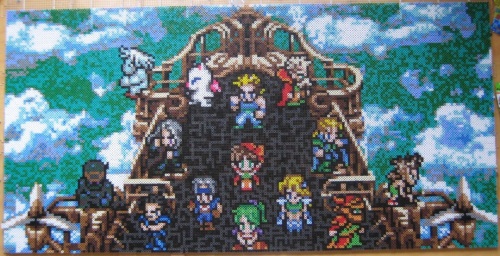
Chris: A lot of RPGs seem like they’re geared toward putting you in a protagonist’s shoes, letting you live his or her story. For me, connecting to a group of people made the experience unique. And better.
Shaun: Personally, I loved that aspect. You would think that a lack of a main character would hurt the characterization, but it made all the other personalities that much more vivid.
Lee: A main character would have taken from the team-forming experience. Sure, there’s a storyline, but every character has his or her place.
Chris: Terra’s the perfect example. She’s certainly one of the main characters, but then again, she’s gone a lot and you don’t have to get her back in the party to beat the game.
Shaun: Exactly. Terra is merely the thread that seems to keep them all together, but she is not the most pivotal character.
Lee: Actually, she was kind of a lame character. Her ability was subpar when compared to others.
Chris: And the whole mothering drama at Mobliz kinda rubbed me the wrong way.
Shaun: Yeah, that was really annoying. That was another thing: the characters were not whiners for the most part, which has seemingly become a staple of protagonists in late Square games.
Chris: Like Cloud.
Shaun: Right. Squall whines and mopes. Cloud whines and mopes. Tidus whines.
Chris: And cries.
Shaun: And wears really unfashionable clothing.
Lee: Locke could have had a lot to whine about. But he stole his own breath whenever he tried to talk about it.
Chris: Right. If you asked Locke about his whining or didn’t call him a treasure hunter, he’d rip out your lungs.
Shaun: How about Cyan? He saw Kefka kill his whole freaking kingdom. Everyone drank that water but him! Everyone!
Lee: That is one vote for drinking mead from now on.
Chris: Yeah, and his wife and son dying is one of the most poignant moments in the game.
Shaun: And then he’s forced to face it on a ghost train. Ripped my heart out.
Lee: I think his scene on the Doomtrain was awesome. Try to get your family back? Sorry, no sword can do that.
Shaun: I just used a Phoenix Down on the train. But hey, Cyan still maintained his awesome. And wrote love letters.
Chris: That’s the thing, though — there’s good stuff developing on just about all these characters. I mean, you can toss out Gogo and Umaro and the like. But there’s at least nine characters with significant stories that really get you involved.
Shaun: That fact is exemplified in the part near the beginning where you split up and control three different parties. Each of those paths had great moments. To this day, that is the only RPG that I created a party based not on who was strongest, but who I liked the best.
Chris: Yep. Because really, Celes in the endgame didn’t need to be there, but she led my party.
Lee: To be honest, it didn’t matter. You could basically make your party members have the same magic. The only difference was their abilities.
Chris: And Runic…well, it wasn’t great.
Lee: Neither were the dances, or several of the tools. There is one character we haven’t mentioned — a character that held the team’s life in his hands multiple times. Interceptor. Need a break? Dog runs out and mauls your opponents.
Shaun: Ah, yes. One of the nice bonuses of not letting Shadow die.
Chris: Exactly. Interceptor’s random attacks on the crotch of bunnycabbages and Magitek alike were very important.
Lee: But overall, the game made you like the characters, and the moral choices for some of those characters. Yummy fish? No yummy fish? You decide.
Chris: Well, the slow fish were easier to catch. Unfortunately, I didn’t realize what that meant to the man in the yellow raincoat. Then it was too late.
Shaun: Everyone knows that people die from eating slow fish.
Chris: EVERYONE BUT ME, SHAUN.
Lee: Celes didn’t die; her heart went on.
Chris: Still, there aren’t many characters in video games with attempted suicides. Especially not from RPGs in the ’90s.
Shaun: That suicide thing was deep stuff. I was like 13 at the time. The only other game story exposure I had was Donkey Kong and Mario. Not exactly the most intriguing plotlines.
Chris: You didn’t see DK trying to off himself when they stole his bananas.
Lee: No, he decided to get things done. Crushing a giant vulture with a giant banana was the way to go.
Shaun: That’s how it was back then. Mediocre or non-existent stories, and Final Fantasy VI. It was on a whole other level.
Of Clowns and the Clowned
Lee: You got two stories out of Final Fantasy VI. The World of Balance showed the somewhat lighter side of life. The World of Ruin was like going to Ethiopia.
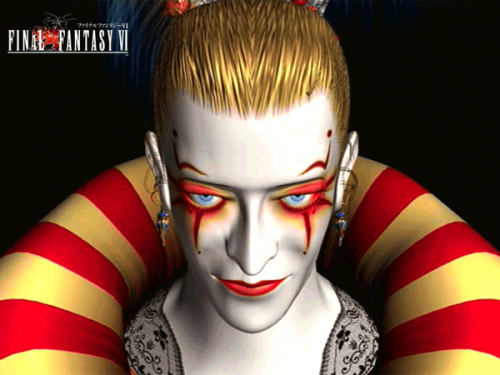
Shaun: Yeah, Kefka is not trying to destroy the world. He freaking succeeded. He kills…pretty much everybody. And unlike other villains who want to destroy the world for seemingly unknown reasons, I actually bought it with Kefka. He exists as an agent of chaos, plain and simple.
Chris: I really don’t think Kefka gets enough credit as a villain. Everyone gushes about Sephiroth, but Kefka kills more people, has a huge impact on the world, and actually succeeds in his goal. Oh, and his ultimate attack is better.
Lee: Kefka looked like a clown, and he embodies all the evil that clowns come with.
Shaun: He is still my favorite gaming villain ever. Oh wait, I forgot about Sephiroth. Everyone knows what an amazing villain he was. He never messes up his hair through like the whole freaking game. Give me another villain who accomplishes that.
Chris: His hair held up even when he was on fire. You’d think all that gel would be combustible.
Lee: Kefka was one of the first to have an agenda. Bowser? Steal the princess. Ganon? Steal the princess. Kefka? Ruin the world and gain ultimate power, while maintaining a comical facade.
Shaun: Yeah, Kefka was great. And you really don’t see it coming, either. He is there for comic relief, and then all of a sudden, he poisons 200 innocent people and destroys the world.
Chris: Kefka doesn’t really seem like much at the start. Even the whole thing with Cyan and his castle is so light-hearted at first. You know, “‘Wait,’ he says. Do I look like a waiter?”
Shaun: He is really like the Joker in The Dark Knight — not overly present, but anytime he’s on screen, you take notice.
Lee: He really plays the emperor like a bitch, too.
Chris: Oh man. I love how Gestahl runs through the gamut of fire spells and it does nothing.
Lee: You think you got that power, old man? I’ll redecorate this hideous mountaintop if I see fit.
Chris: And then he kicks him off the floating mountain. Vintage.
Shaun: That was a great double twist; first, Gestahl tricked the party into believing he was not evil, then Kefka wipes the floor with the emperor and his general.
Lee: I wonder if the emperor survived?
Shaun: Maybe. Final Fantasy VI-2?
Chris: Do you guys feel like Leo had enough of an impact? His story seemed kinda rushed to me.
Lee: I wanted Leo to be playable longer — maybe make him a side character you had to find again. He just didn’t last long.
Shaun: Exactly. I actually thought that’s what he was going to be, until he…died.
Lee: And Relm couldn’t draw him back.
Chris: I guess I just didn’t buy the love interest with him and Terra.
Shaun: Yeah, she had one chance to use her powers for something actually useful, and she failed. She’s always failing.
Lee: That’s another thing — Phoenix Downs were awfully choosy. Sure, it can resurrect your party a million times, but on one lonely, dying girl not even the Phoenix magicite would work. Even if it was broken, you didn’t have to kill off Locke’s chances of ever having a happy life.
Chris: See, Locke and Rachel was legitimate. Made you feel for the characters. Same with Setzer and Daryl. I just didn’t get that same vibe from Leo and Terra, and it kinda made the general feel unimportant — even though he could attack eight times.
Shaun: Well, I don’t really remember that relationship between Leo and Terra. That’s how underdeveloped it was.
Oh My Hero, So Far Away Now
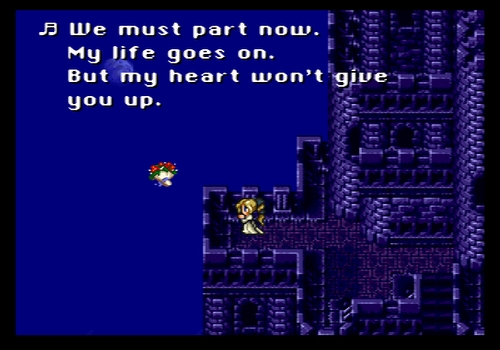
Chris: VI featured one of the most referenced moments in any RPG — the opera scene.
Shaun: Best Final Fantasy scene ever. Maybe. It’s up there.
Lee: I could never remember the lines, and I didn’t feel like I was performing well. I wish I had more time to study.
Shaun: It’s ridiculous and poignant at the same time. And it all builds up to a fight with Ultros, who was hilarious. Not to mention the music was sweet.
Chris: Yeah, the whole “this weight will drop in exactly five minutes” thing cracked me up every time.
Shaun: I had never seen anything like it in any video game before. I loved that battle. That one and the falling waterfall one. So unique. The game did a great job of that; you think you know what to expect (like the World of Balance, for instance), and then it changes the plans.
Lee: At least we knew the real reward. It wasn’t Setzer; it was aerial freedom. The opera was the gateway moment in the game where the characters were finally able to curbstomp gravity.
Chris: For about 30 minutes of gameplay, until you got shot down by Kefka’s fleet. He showed you.
Lee: Kefka always seemed to be a step ahead. I’ll bet he put up the bankroll for the opera.
Chris: Maybe Kefka was the Impresario. I don’t know. I love the opera part and it’s my favorite moment in the game, but at the same time it seems almost…out of place. It still works and it attaches you to Locke and Celes a bit, but it’s just so different from what any other RPGs were doing at the time. I’m not sure if that’s a positive or negative.
Shaun: That’s why it was so ridiculous. But it did lighten up the tone at a time when the game was starting to get really dark. For a few fleeting moments before the world was destroyed, the mood was happy.
Global Warming
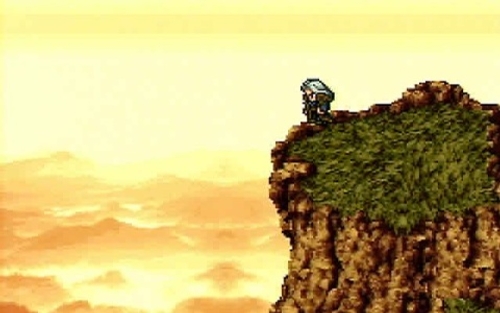
Chris: So you get through the whole floating island deal, and maybe you got lucky and didn’t kill Shadow. You wake up as just Celes and the world is toast. Not much else like that in RPGs, certainly not at the midway point of the game.
Shaun: Your party being completely decimated, and you’re not guaranteed to get them all back — yeah, never before, and to my knowledge, never again.
Lee: It is hard to play a game when you are avoiding a catastrophe. There was nothing you could do about this one, you just sat and watched as Kefka did his thing.
Chris: I mean, you watch the party get violently tossed from the airship as it splits in half, and then the world is exploding as the screen fades to black. Pretty serious stuff.
Shaun: At a time when stories were wholly unpredictable, there was no way anyone knew what to expect after that.
Lee: I was happy with the way the World of Ruin started. You don’t have the same starting characters as the World of Balance, and you have to collect them all again.
Shaun: When things couldn’t seem to get any worse, you more than likely kill an old man with laziness and then your character tries to kill herself.
Chris: And just when Celes finds Locke’s bandana and starts to get her life straight, you find Sabin holding up a mansion with his bare hands.
Lee: Sabin, what a pimp. Didn’t take crap from that house.
Shaun: It gave the player incentives to buy in to the system that was laid out. You could work hard and find your old party members, or just go for the easy route with three characters. And get decimated. The point is that the choice was yours.
Chris: Just like Legends of the Hidden Temple.
Lee: Except the Shrine of the Silver Iguana from the game was kind of lame.
Chris: That was a great mechanic, though. Outside of Celes, Sabin, Edgar and Setzer, everyone else was optional. It further diminished the main character idea, since Terra and Locke are not on that list. Hell, Locke’s one of the last characters most people get back, since you have to split up your party for the Phoenix Cave.
Shaun: Everyone went through changes during that time. Edgar was posing as a thief; Terra was protecting a village and found her purpose (despite how annoying it was); Cyan was writing love letters.
Chris: And Strago…well, he’s a slave to Kefka. But that’s not his fault.
Shaun: For me, Locke’s character arch over the whole game was the most rewarding. Again, Terra is technically the main character, but the game is far from telling just her story.
Chris: And hey, he and Celes end up together in the ruined world, so that’s okay.
Gift of the Magicite
Lee: How about them Espers?
Chris: It wasn’t a bad system, but you touched on the main problem earlier, Lee — everyone could learn everything. So by the end, you had some homogenized characters and everyone just used Ultima.
Shaun: It was a great attempt to shape characters, since the job system from V is absent in this iteration, but it became broken in the endgame.
Lee: I once knew a person who would only give certain people what he thought their class might have. I never bought that. In a fight against Kefka, you want everyone to have Ultima. And Economizers.
Shaun: Well, Kefka is three thousand feet tall then.
Chris: When his Fallen Angel attack ruins your whole party down to 1 HP, that’s not the time for Locke to be trying some Fire 2 nonsense.
Lee: Nope, bust out the healing.
Shaun: But different, character-specific attacks with similar power to Ultima would have been better than a universal Ultima.
Lee: I liked the system in general. You got to learn spells and use the magicite in battle.
Chris: The concept was solid. But it couldn’t hold up all the way through.
Shaun: I did like learning the abilities, and it worked for most of the game. It gets my approval.
Lee: At least the characters weren’t picky. Terra didn’t refuse to use the magicite because of her heritage. They all knew there were limited ways to get more powerful, and the world was counting on them.
Shaun: And it was neat how the Espers served an important purpose in the story as well.
Chris: I kinda felt bad the first time I got magicite, since it involved people dying and all.
Shaun: That’s VI for you. It gives you power, but makes you feel guilty about it at the same time.
Lee: People die every day. If I could harvest bodies to get more powerful, who knows where I would stop?
Shaun: Unless you’re Lee.
Lee: Hit people in the face with a crystal and collect their essence. Foolproof, unless you are relying on getting a skill the person actually had. You would get a lot of lame in this world. And I don’t need any more of that.
Shaun: The nice thing about the Esper system was that it allowed the player to still use the characters they loved. Mog and his dances were useless. Mog with Ultima…better.
Chris: Kupo.

Music of the Night
Chris: Some would call the FFVI soundtrack one of the best of all-time. We touched on the opera, but what other tracks stand out?
Lee: “Dancing Mad.” Love it.
Shaun: The general battle music was the most solid in the series, and that’s not even including boss battles. For me, only Chrono Trigger had better music.
Chris: Personally, the absolute best track is the Magitek Factory. “Devil’s Lab.”
Lee: Zozo’s theme was great. And you heard it a lot if you wanted that chainsaw.
Chris: Zozo was also great because everyone lied to you. But Dancing Mad…I know “One-Winged Angel” gets all the credit, but Dancing Mad was a great final boss theme. Four parts, to boot.
Shaun: The music was so good because it reflected the dark themes of the game so well.
Chris: Right. There were a few tracks with a more upbeat tone to them, either humorous (“Gogo’s Theme”) or hopeful (“Save Them!”). For the most part, the soundtrack captured that dark mood perfectly.
Shaun: It completed the whole immersion. As far as complete presentation, Final Fantasy VI still sounds out as one of the leading examples. Even the sounds themselves were top-notch. It’s not often that I remember the sound a boss makes when he dies. Crash, then rumble rumble rumble. It was great.
The Best of All-Time?
Chris: All things considered, where does Final Fantasy VI belong in the pantheon of RPGs?
Lee: Near the top, if not number one. That spot would have to be hotly contested by other games like Chrono Trigger or even Final Fantasy IV.
Shaun: Although Final Fantasy IX is my favorite for nostalgia reasons, I would have to say VI is the best of the series, especially for what it did for RPGs. It didn’t invent a whole lot, but it perfected.
Chris: VI is definitely my favorite (and my pick for best) of the series. I’m with Lee, though; I don’t think it beats out Chrono Trigger.
Shaun: It belongs up there with Chrono Trigger and Knights of the Old Republic.
Chris: I mean, great soundtrack, great characters, great villain, a well-played twist in the middle — there’s a lot to like here.
Shaun: It did so many of those things for the first time. Even the amnesia plotline — totally played to death now — was acceptable for the time.
Lee: They really need to come out with an updated version so I can enjoy the same game with shinier graphics.
Chris: It seems like a lot of games these days rely too much on graphics and gimmicks. Game designers would do well to look back on FFVI and take notes.
Shaun: It stands as the prime example of what can happen when you incorporate good gameplay with a dramatic and immersive story and well-developed characters. Honestly, the game shouldn’t be restricted to only the best of the genre. It’s up there with Zelda and Mario as one of the best gaming experiences out there, period.
Checkpoint is a series of discussions run by Chris, Shaun and Tech Guy back in their college newspaper days. For more entries in the series, click here.

 Gray Areas